Your mouth is more than just teeth, it’s a window into your health. From the way your gums respond to plaque, to how easily you get cavities, your genes play a powerful role in your dental health.
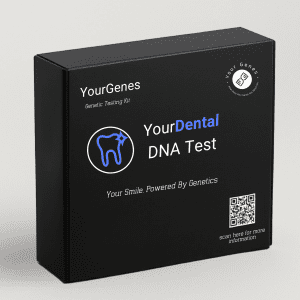
At Your Genes, we’ve created YourDental a simple, non-invasive genetic test that reveals how your DNA influences your teeth, gums, oral bacteria, and overall dental wellness. Whether you brush twice a day or never skip a dentist appointment, your genes may still be silently shaping your risk for dental problems like gum disease, enamel loss, or even tooth loss.
Now, you don’t have to wait for symptoms to appear, you can act early, with science on your side.
Your gums are the quiet guardians of your smile. They hold your teeth in place, protect your jawbone, and keep harmful bacteria out of your bloodstream. But when they’re under attack, they often can’t speak up until it’s too late.
With YourDental, you no longer have to guess.
A simple cheek swab is all it takes to read the signals written in your DNA.
You brush. You floss. You visit your dentist regularly. But still, your gums bleed. They feel sore sometimes. And lately, your teeth seem a little more sensitive, maybe even a little loose.
If this sounds familiar, you’re not alone.
For years, many people have blamed poor hygiene or skipped dental visits for gum problems. But the truth is, gum disease can happen even when you do everything right. And for some of us, the reason lies deeper in our DNA.
It Often Starts Quietly…
Gum disease, also known as periodontal disease, usually begins without a big warning sign. There’s no sudden pain. No dramatic change. Just a little bleeding when you brush. Maybe a bit of swelling or tenderness.
In its early stage—gingivitis, it may even seem harmless. But silently, bacteria are building up beneath the gums, creating tiny pockets of infection. Over time, the problem can progress into periodontitis, a much more serious condition where the bone holding your teeth in place begins to break down.
That’s when the damage becomes real:
Receding gums. Loose teeth.
And eventually—tooth loss.
By the time many people notice, it’s already advanced. And once your teeth start shifting or falling out, it’s harder and more expensive to treat.
Imagine walking into your next dentist appointment already knowing your risks. Able to prevent gum disease before it begins—not with guesswork, but with precision.
Because your mouth isn’t just a reflection of how well you brush.
It’s also a reflection of your genes.
And when you understand both—you protect your smile for life.
Your results will reveal whether you carry certain genetic traits that increase your risk for:
Chronic gum infections
Receding gums
Bone loss around the teeth
Pain or sensitivity after dental work
Tooth loss—despite great hygiene
Bruxism
Dental Caries
Dental Enamel Hypoplasia
Oral Lichen Planus
Recurrent Aphthous Stomatitis
Temporomandibular Joint Disorder
Mouth Ulcers
Erosive Tooth Wear
Tooth Agenesis
Periodontitis
Gingivitis
Dental Malocclusion
Dental Pulp Disease
Primary Dental Caries
Pits and Fissure Surface Dental Caries
Up to 30% of the population may be genetically more likely to develop periodontal disease, even with good oral hygiene.
Genes affect enamel strength, saliva composition, and bacteria levels—all of which influence your risk for cavities.
Conditions like anodontia (missing teeth) or macrodontia (very large teeth) are often inherited.
Some people are genetically predisposed to slower healing or greater pain sensitivity, which can influence dental surgery outcomes.
|
|
|
|---|---|
|
|
YourDental |
|
|
R3 000,00 |
|
|
Understand your genetic predisposition to gum disease, cavities, and oral health conditions. Take proactive steps for lifelong dental wellness. |
|
|
Add to cart |
WhatsApp us